
Cannabis
How to Make Cannabis Oil at Home
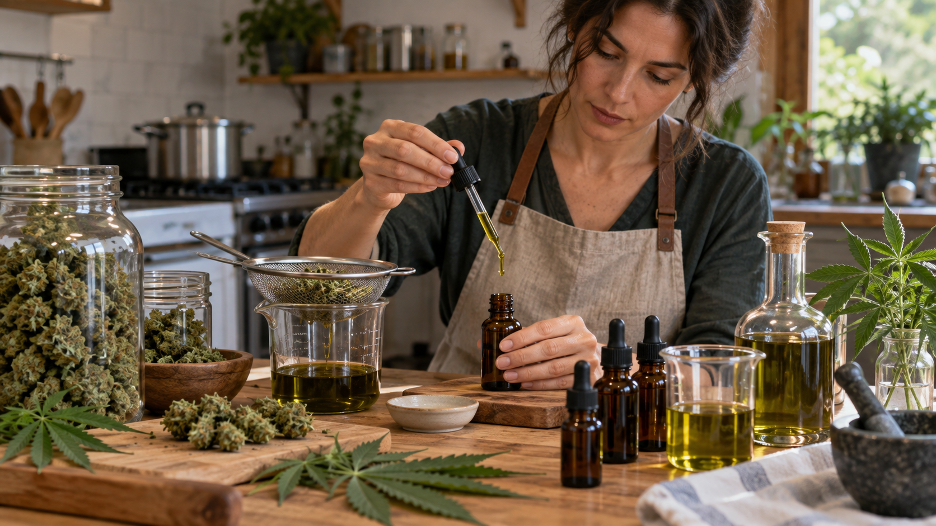
Cannabis Infused Oil, Cannabinoids, and Why Fat Matters
Call it canna oil, weed oil, or marijuana oil: every cannabis oil recipe describes the same thing. Cannabis infused oil is cooking fat that has absorbed cannabinoids from decarboxylated flower.
THC does not dissolve in water. It binds to fat, which is why every reliable infusion method uses an oil or a butter as its carrier rather than a broth or a syrup. The fat content of your carrier decides how much of the plant’s chemistry ends up in the finished product. A fat that is 82% saturated pulls more cannabinoids out of the same gram of flower than a fat that is 14% saturated.
Cannaoil vs Cannabutter: Choosing Your Fat
Cannaoil and cannabutter do the same job through the same chemistry. Butter contains milk solids and water, so it browns faster, burns easier, and keeps for less time in the fridge. Oil holds a cleaner flavor and measures more predictably by the teaspoon.
Cannabutter wins in baking, where the dairy is part of the recipe. Cannaoil wins everywhere else.
Coconut Oil, Olive Oil, or MCT Oil?
Coconut oil is the default for good reason: roughly 82% saturated fat, a long shelf life, and a neutral taste once refined. Olive oil carries a savory note that suits dressings and pasta. MCT oil stays liquid at room temperature, which makes it the right pick for tinctures, capsules, and coffee. Avocado oil has the highest smoke point so is used for very particular cannabis cooking recipes.
- Coconut oil: highest cannabinoid absorption, solid below 76°F, works for baking and topicals
- Olive oil: lower smoke point, strong flavor, best used raw or finished off the heat
- MCT oil: stays pourable, nearly tasteless, easiest to dose by the dropper
- Butter: technically cannabutter, same method, shorter fridge life
Infused coconut oil is also the reason most of our vegan edibles work without dairy. Cannabis coconut oil doubles as a topical base, which no other fat on this list manages.
Better fat means better infusion, better consistency, and a smoother cannabis cooking experience
Explore Cannabis Cooking Essentials
Decarboxylation: The Step That Makes THC Oil Work
Raw cannabis flower contains almost no active THC. It contains THCA, the acidic precursor, and THCA does nothing when you eat it. Heat converts THCA into THC by knocking a carboxyl group off the molecule, a reaction called decarboxylation. Smoking does this instantly with a flame. Infusing does not, which is why skipping the oven is the single most common reason homemade THC oil fails to work at all.
How to Decarboxylate Flower in the Oven Without Killing Terpenes
Terpenes evaporate at a lower temperature than cannabinoids convert. Push the oven too hot and you activate the THC while boiling off the aromatic compounds that gave the strain its character in the first place. Low and slow protects both.
- Break the flower apart by hand into pieces the size of a pea. Do not grind it: finely ground flower scorches, and a decarb that scorches loses potency.
- Spread it in one layer on a baking sheet lined with parchment paper.
- Bake at 240°F for 40 minutes, stirring once at the halfway mark.
- Let it cool in the pan before it touches any oil.
Indica, Sativa, or Hybrid: Does Strain Choice Change Your Oil?
Decarboxylation preserves the broad terpene profile of whatever you started with, so an indica-leaning batch produces a heavier, more sedating oil than a sativa batch of identical potency. A hybrid strain splits the difference. Edibles also metabolize differently from smoke, which amplifies whatever the strain was already doing.
Choose the strain for the effect you want at hour two, not the one you want at minute ten. Our breakdown of sativa vs indica explains the nuances between these popular strains.
Start with properly prepared flower and give your homemade infusion its best foundation
The Cannabis Infusion: How to Infuse Oil Low and Slow
The infusion itself is chemistry you cannot rush. Cannabinoids migrate from plant material into fat at a rate set by temperature and time, and the useful window sits between 160°F and 200°F. Below that, the transfer stalls. Above it, THC degrades into CBN and your oil turns sleepy instead of strong.
Two hours at 180°F beats one hour at 250°F every time.
Saucepan Or Slow Cooker, or Mason Jar?
Any vessel that holds a steady low heat will work. The differences are about attention, not outcome.
- Saucepan or double boiler: Fastest to set up, needs a thermometer and a watchful eye
- Slow cooker: Set it on low and walk away, the most forgiving option for a first batch
- Mason jar in a water bath: Seals in the aroma, which matters if you share walls with neighbors
- Sous vide or Instant Pot: The most precise temperature control available in a home kitchen
A mason jar sitting in a simmering pot of water is the method most people land on after one smoky kitchen.
Stir Low and Slow: Temperature, Time, and Infusion Ratio
The standard infusion ratio is one cup of oil to 7 to 14 grams of decarboxylated flower. Seven grams makes a moderate oil. Fourteen makes something you will want to dose carefully. Stir every thirty minutes, hold a bare simmer under 200°F, and never let the mixture reach a rolling boil.
Two to four hours is the working range. Longer steeping extracts marginally more, then stops helping.
If you plan to cook with this regularly, buying flower by the ounce costs far less per batch than buying eighths.
Patience pays off when you want a smoother, more consistent homemade infusion
Find Flower for Your Next Batch
Strain, Store, and Dose Your Homemade Cannabis Oil
Everything after the infusion is about protecting what you made. Straining removes the spent plant material. Storage protects the oil from light and air, both of which degrade cannabinoids over weeks. Dosing keeps the finished product from ruining somebody’s evening.
Straining Through Cheesecloth or a Fine Mesh Strainer
Pour the hot mixture through two layers of cheesecloth set over a fine mesh strainer into a clean jar. Let gravity do the work. The instinct to squeeze the cheesecloth is strong and wrong: pressing forces chlorophyll out of the plant material, and chlorophyll is what makes homemade oil taste like lawn clippings.
Discard the spent flower. It has given up everything useful.
Let the oil cool to room temperature before you cap it, or condensation will collect under the lid and shorten the shelf life.
Dosing: Milligrams Per Serving, Onset Time, and Storage
Home infusion cannot be precise, but the arithmetic gets you close. Assume roughly 15% loss during decarboxylation and straining. A potency calculator does the same sum faster, and a tincture made the same way doses even more finely than oil.
- Take the THC percentage on the label and multiply by 1,000 to get milligrams per gram.
- Multiply by the grams you infused, then take 85% of that.
- Divide by the number of servings your oil will produce.
A 20% THC eighth infused into one cup of oil yields roughly 595mg total, or about 37mg per tablespoon across 16 tablespoons. Start low, at a quarter of what you think you want, and wait.
Fat makes cannabinoids more bioavailable, so an edible dosage hits harder than the same milligrams inhaled. Onset runs 45 minutes to two hours and the effects last far longer, which is why tolerance from smoking tells you very little. CBD in the flower softens the edge without lowering the THC. Our full edibles dosing guide walks through the maths with more examples.
Store the finished oil in an airtight container in a cool dark place, and keep it in a child resistant container if anyone under 21 shares your home.
Finish your infusion properly so every serving stays fresh, consistent, and manageable
Putting Your Infused Cooking Oil to Work
Cooking with cannabis is mostly substitution. Cannabis cooking oil replaces the regular fat in any recipe that does not require high heat, and keeps the total infused portion to half the fat in the dish so the flavor stays in the background.
Baked Goods, Salad Dressings, and Capsules
Baked goods are the obvious home for it, since chocolate and butter mask the taste of cannabis better than anything else in a kitchen. Salad dressings work beautifully with an olive oil infusion. Capsules suit anyone who wants the effect without the meal.
Brownies, cookies, and banana bread all take it at half the fat. Vinaigrettes and hummus take it raw. Coffee and hot chocolate work because the fat emulsifies into the drink, and empty gel capsules skip cooking altogether. Gummies are the one thing it will not do, since they set with water and gelatin rather than fat.
Turn one homemade infusion into countless recipes, snacks, meals, and creative treats
Or Skip the Four Hours: Same-Day Edible Delivery in Washington DC
At Purple Penthouse, we know not everyone wants to spend hours making cannabis-infused treats at home. That’s why we focus on making the experience simpler, with convenient same-day options for eligible adults in Washington, DC under Initiative 71.
We prioritize clear product information, responsible service, and an easy customer experience from start to finish. Before ordering, we always recommend checking current local cannabis laws, age requirements, and applicable regulations so you can make an informed, responsible choice.
Skip the kitchen and let Purple Penthouse make your cannabis experience more convenient
