
Cannabis
What Are Trichomes? A Guide to Cannabis Resin Glands
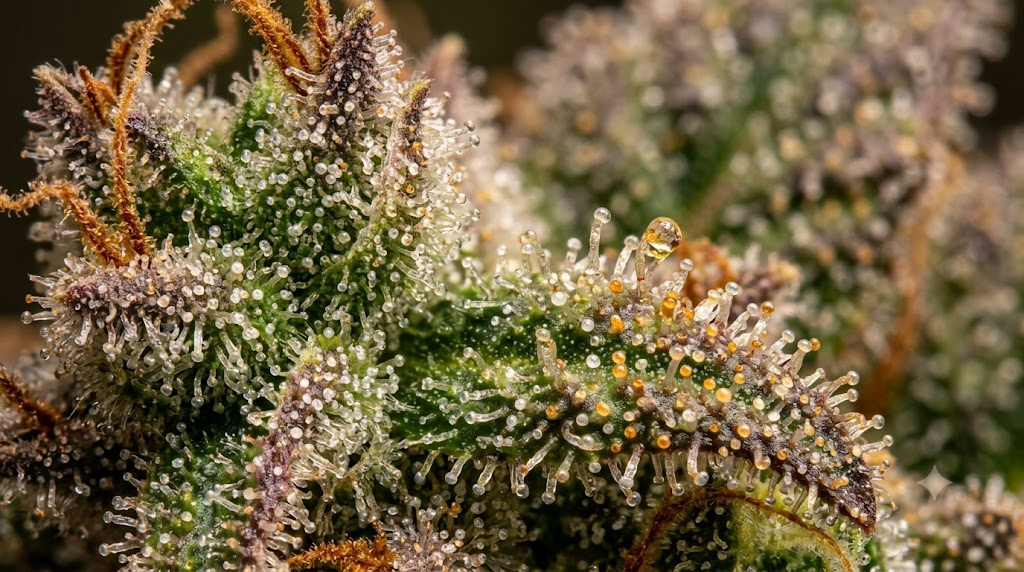
Trichomes are the tiny, crystal-like structures that give cannabis flower its frosty appearance and sticky texture. Often described as microscopic hairs or resin glands, they form across the surface of cannabis buds and nearby sugar leaves.
These glandular structures are responsible for producing and storing many of the compounds that shape the cannabis experience, including cannabinoids, terpenes and flavonoids. THC, CBD and aromatic terpenes are concentrated inside the rounded heads of mature glandular trichomes.
Trichomes also serve an important biological purpose. They help protect the cannabis plant from pests, ultraviolet light and environmental threats while supporting the development of the resinous compounds valued by cannabis consumers.
What Do Cannabis Trichomes Do?
Cannabis trichomes perform two closely connected roles. They protect the plant while producing many of the active compounds associated with cannabis flower.
These delicate structures begin developing during the flowering stage, becoming increasingly visible as the plant matures. Their secretory cells produce cannabinoids and aromatic compounds before storing them within a resin-filled trichome head.
Taste the difference that mature, active resin glands make with our top-shelf menu
How Resin Glands Protect the Cannabis Plant
In nature, trichomes act as a plant defence mechanism. Their sticky resin and strong aromas can discourage insects, pests and larger herbivores from feeding on the plant.
Cannabis trichomes can help protect the plant in several ways:
- Sticky resin may trap or repel small insects.
- Strong terpenes may deter pests and herbivores.
- Trichomes can provide a degree of protection from UV light.
- Certain compounds may have antimicrobial properties.
- The surface layer can help shield delicate reproductive organs.
The resinous coating is particularly concentrated around the buds and sugar leaves of female cannabis plants. These are the areas most closely connected to reproduction, making them especially important for the plant to protect.
Trichomes may also reduce the effects of ultraviolet radiation. UV light can damage plant tissues, so this crystalline outer layer gives the cannabis plant an additional natural barrier.
How Cannabinoids, Terpenes and Flavonoids Develop
The heads of glandular trichomes contain secretory cells that support cannabinoid and terpene biosynthesis. These processes create the phytochemicals that influence how cannabis smells, tastes and interacts with the body.
Important compounds produced within cannabis trichomes include:
- Cannabinoids, such as THCA, CBDA, CBGA and smaller concentrations of minor cannabinoids
- Terpenes, such as limonene, alpha-pinene and beta-caryophyllene
- Flavonoids, which contribute to plant colour, aroma and biological activity
Raw cannabis primarily contains acidic cannabinoids such as THCA and CBDA. Heat later converts some of these compounds into THC and CBD through decarboxylation.
Terpenes provide much of the flower’s aromatic profile. Depending on the plant genetics and terpene profile, a strain may smell citrusy, earthy, sweet, floral or pine-like.
What Are the Main Types of Cannabis Trichomes?
Cannabis plants can produce glandular and non-glandular trichomes. The glandular varieties receive the most attention because they produce and store cannabinoids, terpenes and resin.
The three main types of cannabis trichomes are:
- Bulbous trichomes
- Capitate-sessile trichomes
- Capitate-stalked trichomes
Each type differs in size, structure and resin-production capacity.
Bulbous and Capitate-Sessile Trichomes
Bulbous trichomes are the smallest type found on the cannabis plant. They are microscopic and may consist of only a few cells, making them difficult to see without substantial magnification.
Although bulbous trichomes cover parts of the plant’s epidermal surface, they produce relatively small amounts of resin compared with larger glandular structures.
Capitate-sessile trichomes are slightly larger. The word capitate refers to their rounded head, while sessile means that the head sits close to the plant surface rather than being elevated on a long stalk.
These sessile trichomes contain a globular head and a short base. They contribute to cannabinoid and terpene production, although they are less prominent than capitate-stalked trichomes.
Capitate-Stalked Trichomes and Resin Production
Capitate-stalked trichomes are the largest and most visible resin-producing glands on cannabis flower. They have a mushroom-shaped appearance, with a rounded trichome head supported by a multicellular stalk.
This globular head contains a secretory cavity where cannabinoids, terpenes and other secondary metabolites accumulate. As resin production increases, the head becomes fuller and more visible.
Capitate-stalked trichomes are especially common on mature buds and sugar leaves. They create much of the sparkling, frosty coating associated with resinous cannabis flower.
We hand-select strains packed with the highest-producing resin glands for your pure enjoyment
What Do Clear, Cloudy and Amber Trichomes Mean?
The appearance of cannabis trichomes changes as the flowering cycle progresses. They generally move through clear, cloudy or milky, and amber colour stages.
Growers often inspect these changes with a magnifying glass, jeweller’s loupe or digital microscope when assessing plant maturation. For consumers, these colours provide useful context about how cannabinoids develop, although they do not offer a complete measure of finished flower quality.
Clear Trichomes and Early Plant Maturity
Clear trichomes usually indicate that the resin glands are still developing. During this early stage, cannabinoid concentration has not yet reached its potential peak.
The trichome heads may appear transparent and glass-like under magnification. Harvesting too early can result in flower with less developed cannabinoids, terpenes and resin.
Some clear trichomes may remain on a plant even as other resin glands mature. Plant development is not always perfectly uniform, which is why cultivators typically assess multiple parts of the flower.
Milky Trichomes and Peak Potency
As trichomes mature, their heads often change from transparent to cloudy or milky white. This appearance is caused by changes inside the resin glands as cannabinoids and other compounds accumulate.
Milky trichomes are commonly associated with peak maturity and a high concentration of THCA. For this reason, growers often view predominantly cloudy trichomes as a sign that the plant is approaching an ideal harvest window.
However, trichome colour is only one factor. Plant genetics, growing conditions, drying, curing and storage can all affect the final potency and consumer experience.
Amber Trichomes and Cannabinoid Degradation
With additional time, some mature trichomes turn amber or golden. This stage may indicate that oxidation and cannabinoid degradation have begun.
As THC degrades, some of it may convert into CBN. This does not mean amber trichomes are inherently undesirable. Different harvest timing choices may support different cannabinoid profiles and perceived effects.
A mixture of cloudy and amber trichomes is common in mature cannabis flower. What matters is the overall resin profile rather than the colour of one isolated trichome.
Do More Trichomes Mean Stronger Weed?
A heavily frosted bud may look impressive, but visible trichome quantity does not automatically prove that cannabis is stronger.
Potency depends on the cannabinoid concentration inside the resin glands, not simply how many crystals can be seen with the naked eye. Some flower may have a dense visible coating but a moderate THC level, while less frosty flower may have a strong cannabinoid and terpene profile.
Trichome Density, Plant Genetics and Flower Quality
Plant genetics have a major influence on trichome density, resin production and cannabinoid biosynthesis. Certain cultivars naturally develop a thicker frosty coating than others.
Environmental conditions can also affect trichome formation. Important factors include temperature, humidity, lighting, airflow, plant health and the timing of harvest.
When comparing cannabis flower, consider:
- Aroma: A well-preserved terpene profile should smell distinct rather than flat or stale.
- Texture: Flower should not feel excessively dry, wet or brittle.
- Resin: Visible trichomes can be encouraging, but they are not a complete potency test.
- Cannabinoid information: Available THC, CBD and minor cannabinoid details offer better context.
- Storage: Light, heat and excessive handling can damage trichomes and accelerate terpene loss.
The strongest indicator of product quality is the combination of plant genetics, proper cultivation, careful processing and good storage conditions.
How Resin Glands Shape Flower, Kief and Concentrates
Trichomes are central to cannabis flower, kief, hash and many cannabis concentrates. When dried resin glands separate from flower, they can collect as the powder-like substance known as kief.
Kief may be pressed or processed into hashish. Other extraction processes separate cannabinoids and terpenes from plant material to create products such as shatter, wax and BHO.
Because these products concentrate resin-derived compounds, the quality of the starting flower and the extraction method can significantly affect the finished concentrate. Shatter can also be decarboxylated (heated to activate the cannabinoids) and incorporated into infused foods when prepared and dosed correctly.
Preserving Delicate Trichomes During Handling and Storage
Trichomes are fragile. Excessive handling can break their stalks or detach resin-filled heads from the flower.
Poor storage conditions can also degrade cannabinoids and volatile aromatic compounds. Heat may accelerate chemical degradation, while light and oxygen can affect potency and terpene preservation.
To help protect cannabis plant trichomes after harvesting:
- Store flower in an airtight container.
- Keep it away from direct sunlight.
- Avoid excessive heat and moisture.
- Handle buds gently rather than repeatedly squeezing them.
- Maintain appropriate humidity without allowing mould to develop.
Careful storage preserves more than freshness. It helps protect the resin glands responsible for aroma, flavour and potency.
Explore Our Range of Concentrates
Buy Cannabis Products With Carefully Curated Trichomes
At Purple Penthouse, we believe the true magic of cannabis lies in the details, specifically the trichomes. These tiny, sparkling resin glands hold the cannabinoids and terpenes that define each strain’s unique potency and aroma. That’s why we meticulously source and curate our products, ensuring every bud we deliver is shimmering with intact, mature trichomes. When you shop with us, you’re not just buying cannabis; you’re investing in a premium, rich, frosty experience crafted to elevate your mind and body.
Don’t wait, experience the ultimate trichome quality and order your Purple Penthouse delivery today!
